Phoenix, Arizona pigeon-control property-planning and provider-match request page. WD Pigeon Solutions does not claim a local office, provider, project, price, response time, or result in this city.
Pigeon Control in Phoenix, Arizona — Humane Bird Removal & Prevention
Property-specific pigeon-control planning and provider-match requests for Phoenix. This page does not guarantee coverage, credentials, price, timing, or results.
Document the PropertyCompare MethodsRequire Written TermsProvider verification checklist
This page describes a provider-matching option, not a local WD Pigeon Solutions office. Provider availability, credentials, pricing, response time, warranties, and legal requirements must be confirmed for the specific property before work begins.
Reference population
1,563,025
Urban context
Major urban market
Place classification
Primary administrative center
Geographic reference
33.4484° N, 112.0740° W
What an assessment should check
✓Inspect high-density roofs, transit structures, parking decks, loading areas, and waste-handling zones separately.
✓Administrative centers often mix older civic buildings with modern commercial property; attachment methods should be selected per substrate.
✓Include UV exposure, heat, rainfall, and year-round nesting pressure in the material review where those conditions apply.
Geographic signal: Subtropical latitude band; northern hemisphere. This is planning context, not a property inspection or climate guarantee.
How to use this page
Use the location context to prepare photos, identify affected surfaces, estimate working height, and describe active nesting or cleanup concerns. A matching request is reviewed against available independent providers; submission does not guarantee that a provider is available.
Location reference: GeoNames-derived all-the-cities dataset (GeoNames ID 5308655). Population and coordinates are reference data, not live census or service-availability data.
Hand-authored city decision guide
How a Phoenix property changes the project scope
Prioritize heat, UV exposure, monsoon wind and drainage, solar-array compatibility, shade structures, and roof access. Product labels and attachment assumptions should be checked against surface temperatures and the actual roof system.
This page is in the first content-upgrade cohort because its reference population ranks #6 among the distinct U.S. city markets selected for review. Population is only a production-priority proxy; it is not evidence of WD revenue, search demand, provider availability, or pigeon activity.
If the property is a solar array on tile or low-slope roof
Measure the complete array perimeter and record panel frames, conduit, tiles or membrane, roof pitch, wiring concerns, drainage, and installer warranty rules. Avoid drilling or fastening assumptions without roof and solar approval.
If the property is a stucco home with shade structures
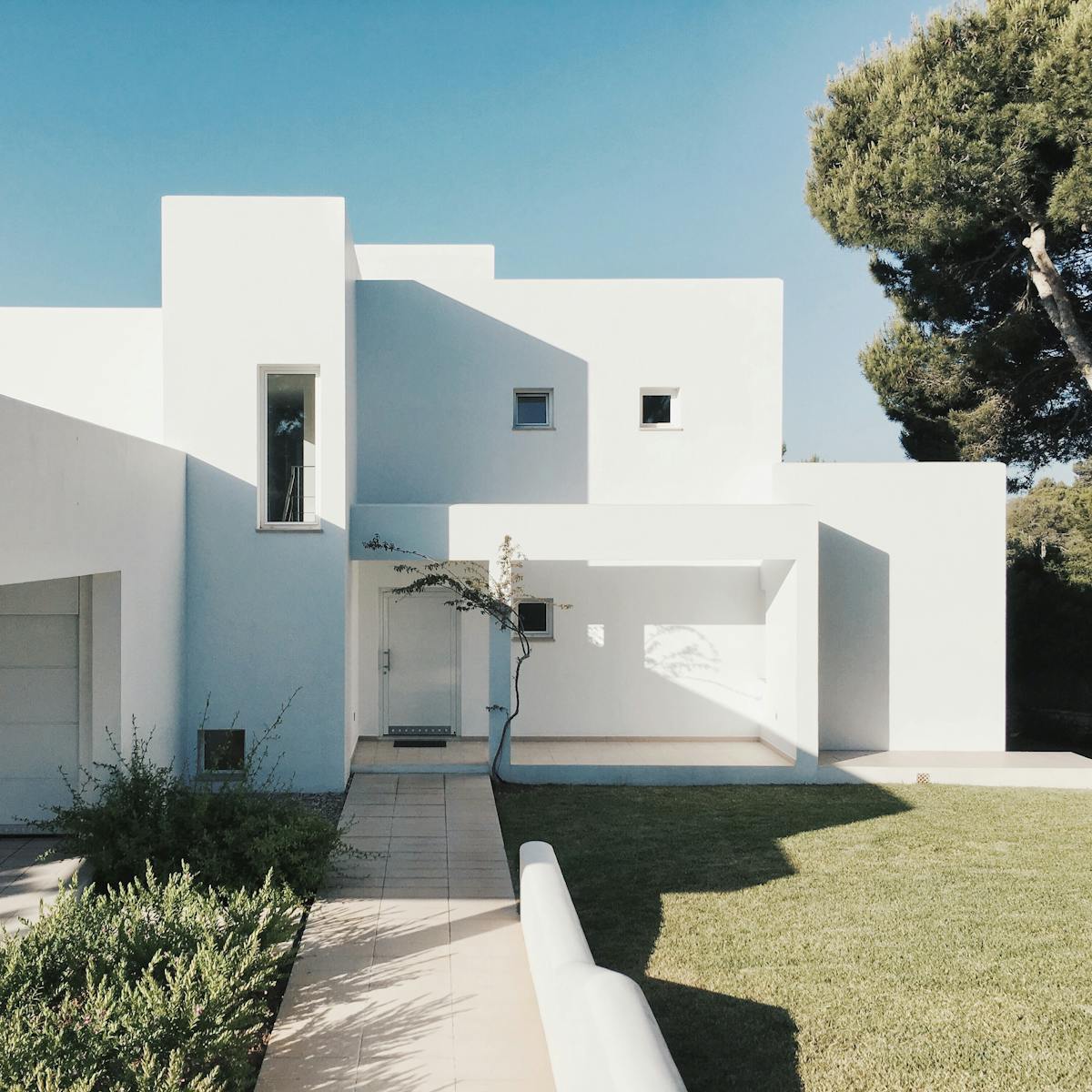
Inspect eaves, patio beams, scuppers, parapets, roof equipment, and decorative features. Determine whether birds are landing, nesting, or entering before choosing a point deterrent or closure.
If the property is a retail canopy or parking structure
Map beams, lights, fire equipment, signs, expansion joints, pedestrian paths, and shaded resting areas. Include traffic control and overhead-work protection in the access plan.
Site-review sequence
1Inspect in safe weather and document shade, surface exposure, roof type, and access route.
2Separate solar, tile, stucco, metal, and concrete attachment zones.
3Check manufacturer limits for heat, UV, wind, and substrate compatibility.
4Require follow-up inspection criteria after severe wind or monsoon conditions where appropriate.
Questions that expose a weak proposal
?Are solar and roof warranties addressed in writing?
?Which materials are specified for prolonged heat and UV exposure?
?How are drainage, scuppers, roof traffic, and equipment service preserved?
?Does any alteration require Phoenix Planning and Development review?
Verify the local rule at the source
Confirm permit and inspection needs with Planning and Development for the actual attachment, roof, electrical, access, or structural work.
Official links can change. Confirm that the page belongs to the named government before relying on it.
Local evidence package · reviewed 2026-08-01
The short answer for a Phoenix property
For a Phoenix pigeon-control project, first separate solar-array, tile or membrane roof, stucco, shade-structure, drainage, and public-access zones. Check current heat and monsoon conditions before roof work, verify every product against its manufacturer limits, and ask Phoenix Planning and Development whether the proposed attachment, electrical, structural, or historic work needs review.
Evidence boundary: this package contains reviewed public planning sources and the specifically labeled request or routing evidence below, not WD project history. No first-party quote sample, customer outcome, or property diagnosis is published for Phoenix yet.
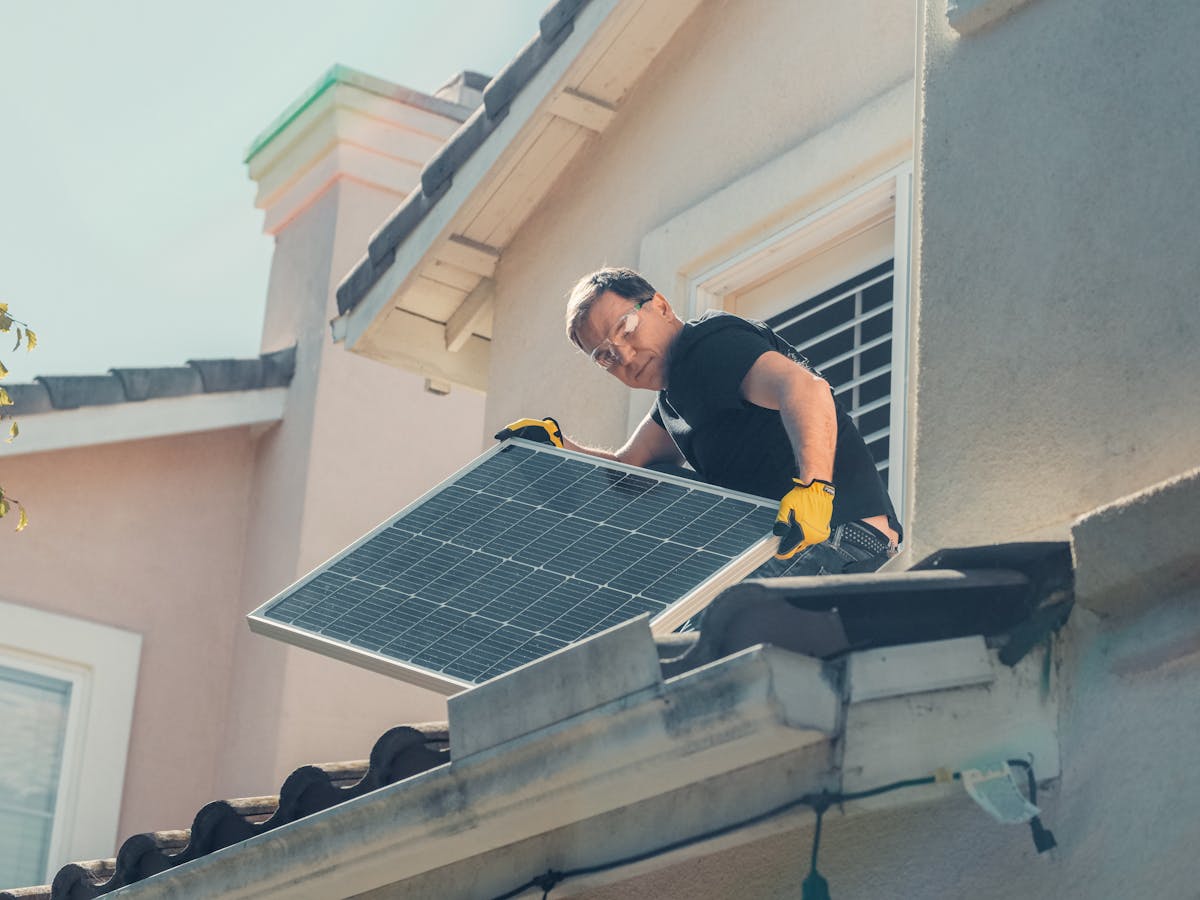
AI-generated planning illustration showing roof and solar assessment zones; not a WD project photograph.
Request and routing evidence
WD accepts and routes pigeon-control requests for Phoenix.
Basis: Business-owner coverage confirmation received 2026-08-01.
Limit: Routing coverage is not a guaranteed appointment. Provider acceptance, timing, price, credentials, and scope must be confirmed for the address.
Third-party price reference
$105–$3,100
third-party reported Phoenix pigeon-removal project range
• This is not a WD quote or a guaranteed local price.
• Angi states that the page was created with automation and fact-checked by an editor.
• The published range does not define the included cleanup, exclusion, access equipment, repairs, permits, monitoring, or warranty.
Finding: Phoenix directs owners to project-specific building permits, plan review, inspections, codes, commercial or multifamily resources, and historic-preservation guidance.
Use it this way: Ask the provider to classify proposed drilling, fastening, roof, electrical, structural, and access work, then verify the classification with the City before work begins.
It does not prove: It does not establish that a pigeon-control product requires a permit at every address.
Finding: Phoenix publishes a dedicated residential photovoltaic submission path alongside residential building resources.
Use it this way: When exclusion touches a solar array, require written allocation of roof, panel-frame, wiring, warranty, and inspection responsibility.
It does not prove: It does not authorize a bird-control contractor to alter an array or determine solar warranty coverage.
Finding: The National Weather Service Phoenix office publishes local climate records, monsoon statistics, and extreme-temperature data.
Use it this way: Use current forecasts and manufacturer documentation to set safe roof-access windows and to check heat, UV, wind, and rainfall assumptions.
It does not prove: Climate records do not describe conditions on a specific roof or predict a safe work window.
Property conditions, provider coverage, pricing, and current rules must be verified for the address.
Pigeon Control in Phoenix: The Growing Challenge
A planning page, not a Phoenix office listing
Phoenix, Arizona is classified as a primary administrative center in the reference dataset; reference population: 1,563,025; coordinates: 33.4484° N, 112.0740° W. WD has not used this record to claim a local crew or measured pigeon problem. A match project brief needs building photographs, treatment area dimensions, height, active nesting details, cleanup needs, and safe access information.
Pigeon-control methods to compare for a Phoenix request
These links explain possible methods; they do not promise that a provider or method is available at the address.
Links are selected from the researched city context. Browse the full service evidence directory for other methods.
Pigeon-control methods to compare in Phoenix, Arizona
Turn observations into a Phoenix scope
An open bay may call for a continuous barrier; a narrow ledge may call for a point deterrent; a verified gap may call for compatible sealing; droppings require a separate cleanup decision. Ask the provider to evaluate at least one workable alternative and define untreated areas.
Map the Phoenix problem before pricing it
Separate observed landing, roosting, nesting, entry, attractant, and contamination points. Record timing, building features, eggs or nestlings, occupied zones, and safe access. Avoid dry disturbance or height work merely to investigate; the documented map should define both proposal and completion check.
Property inspection zones in Phoenix
Key areas across Phoenix where pigeon infestations concentrate and cause the most damage.
High ActivityObserve safely at more than one time of day
Observed roosting surfaces
Map ledges, parapets, signs, balconies, equipment, and roof edges actually used at the Phoenix property.
High ActivityBefore writing the exclusion scope
Sheltered openings
Inspect vents, soffits, gaps, canopies, and cavities without disturbing active nests or unidentified birds.
Medium ActivityDuring normal property operations
Food, water, and waste
Document attractants on or adjacent to the property; do not assume a citywide pattern.
Moderate ActivityDuring proposal comparison
Adjacent untreated surfaces
Define where activity could shift if only one surface is treated.
Why Use WD Pigeon Solutions in Phoenix?
No local-office fiction for Phoenix
This page is a planning and project brief route. It does not establish WD personnel or a contractor in the city. If an independent contractor responds, audit its identity, credentials, insurance, work evidence, terms, and proposed completion standard yourself.
Seasonal Pigeon Activity in Phoenix
How pigeon behavior in Phoenix shifts through the year — and when to act.
Spring
Use current local weather data
Activity must be observed at the property; this page does not publish invented seasonal measurements.
Our Recommendation:
Inspect safely, document active nests and affected surfaces, and verify method and wildlife requirements before work.
Summer
Use current local weather data
Activity must be observed at the property; this page does not publish invented seasonal measurements.
Our Recommendation:
Inspect safely, document active nests and affected surfaces, and verify method and wildlife requirements before work.
Fall
Use current local weather data
Activity must be observed at the property; this page does not publish invented seasonal measurements.
Our Recommendation:
Inspect safely, document active nests and affected surfaces, and verify method and wildlife requirements before work.
Winter
Use current local weather data
Activity must be observed at the property; this page does not publish invented seasonal measurements.
Our Recommendation:
Inspect safely, document active nests and affected surfaces, and verify method and wildlife requirements before work.
What to Expect During Your Phoenix Pigeon Control Service
A six-part Phoenix decision record
1. Photograph and measure safely.
2. Identify species and active nests.
3. Compare method fit, access, safety, and rules.
4. Verify the independent business.
5. Sign a bounded written proposal.
6. Check completion site observations and follow-up terms.
The project brief itself promises no provider, schedule, price, or result.
Phoenix Pigeon Facts & Statistics
Reference record and its boundary
- Phoenix, Arizona is classified as a primary administrative center in the reference dataset; reference population: 1,563,025; coordinates: 33.4484° N, 112.0740° W.
- Source: GeoNames-derived all-the-cities dataset (https://www.geonames.org/).
- Not measured: birds, site damage, independent business coverage, response, price, or outcome.
- Required next: site photographs, dimensions, access, nesting evidence, and a written independent business scope.
Weather checks before work in Phoenix
How Phoenix's typical weather conditions influence pigeon behavior throughout the year.
Season
Avg High
Avg Low
Precipitation
Pigeon Impact
Spring
Verify locally
Verify locally
Verify locally
Weather can affect access, materials, cleanup, and bird behavior; confirm site conditions.
Summer
Verify locally
Verify locally
Verify locally
Weather can affect access, materials, cleanup, and bird behavior; confirm site conditions.
Fall
Verify locally
Verify locally
Verify locally
Weather can affect access, materials, cleanup, and bird behavior; confirm site conditions.
Winter
Verify locally
Verify locally
Verify locally
Weather can affect access, materials, cleanup, and bird behavior; confirm site conditions.
Getting to Your Phoenix Service Appointment
Traffic and scheduling considerations for Phoenix pigeon control services.
Morning Appointments
Suitable for residential properties in Phoenix. Early starts (7–9 AM) let the crew complete most installations before afternoon heat or traffic. Pigeons are highly active at dawn, making morning the ideal time for behavioral assessment.
Midday Appointments
Suitable for commercial properties in Phoenix where early access may be restricted. Providers navigate Phoenix traffic patterns efficiently, and midday scheduling avoids peak commute hours for both the crew and your business operations.
Weekend & Flexible Scheduling
Many providers offer Saturday appointments for Phoenix properties where weekday access is difficult. Urgent situations are often accommodated quickly. Contact us and we'll help find a time that works for your schedule.
Our Services
Our Services
Compare pigeon and bird-control methods, limitations, and quote inputs for your property and needs.
WD Pigeon Solutions is a matching service, not the contractor performing the work. We do not publish star ratings or customer testimonials unless their source, consent, and relationship to a completed match can be documented. Always verify the provider you may hire.
Identity and credentials
Confirm the provider's legal business name, applicable license, insurance certificate, and who will perform the work.
Written scope
Require the affected surfaces, preparation, materials, cleanup, exclusions, price, and change-order process in writing.
Method fit
Ask why the proposed method fits the actual nesting or roosting point and what alternatives were considered.
Wildlife and safety
Ask how active nests, non-target birds, work at height, occupied areas, and waste handling will be managed.
Warranty terms
If a warranty is offered, get the covered surfaces, duration, exclusions, maintenance requirements, and remedy in writing.
Independent references
Review recent third-party feedback for the specific contractor and request comparable project references when the scope is substantial.
Pigeons mate for life and can breed up to 8 times per year, producing 2 eggs each time.
Pigeons can recognize all 26 letters of the English alphabet and can even be trained to distinguish between paintings by Monet and Picasso.
Feral pigeon populations can double in just 2 months under ideal conditions.
Pigeon droppings are highly acidic (pH 3-4.5) and can eat through car paint, concrete, and roofing materials.
A single pigeon produces about 25 pounds of droppings per year, which can corrode metal and damage building facades.
Pigeons can find their way home from over 1,300 miles away — they were used as message carriers in both World Wars.
Pigeon Control in Phoenix, Arizona
See how WD Pigeon Solutions connects Phoenix properties with providers using professional, humane pigeon removal and exclusion techniques.
Media disclosure
No verified WD project video is published here. The former play control was a nonfunctional presentation element and has been removed. Project media should appear only with source, location, provider, date, and permission documentation.